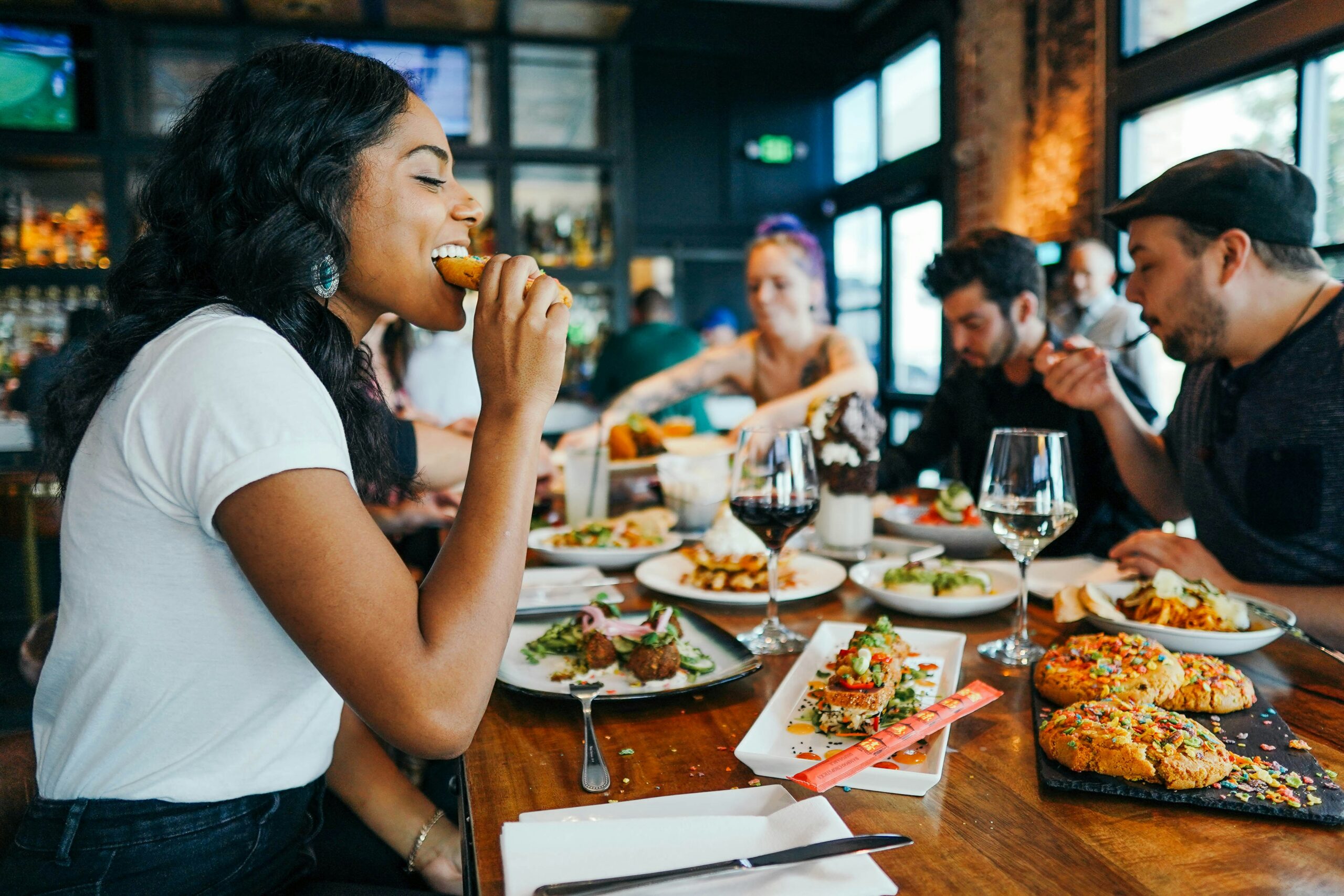
Where Gen Z Shops, Eats and Where the Line Between the Two Has Blurred
Later in the week, Maya is at Kroger.
She has a list, a rough budget and enough time to get through her shopping before something else demands attention. The financial pressure from earlier in the week is still running in the background. Less helpfully, so is a half-formed concern about protein that has been following her since Wednesday’s TikTok session.
Before getting to what happens inside the grocery store, one number from the survey reframes where Maya’s food week actually takes place.
Maya Eats Out More Than You Think
Two-thirds of Gen Z eat a meal or snack from outside the home three to five times a week or more. Not as an occasional treat. As a recurring weekly pattern. Among Boomers+, only 15% eat out that frequently. Most older Americans eat out once or twice a week, or less.
That single finding changes how to read everything else about Gen Z and food. For Maya, the grocery store matters, but it isn’t where most of her food decisions happen. Drive-throughs, delivery apps, food trucks, fast-casual counters and the grab-and-go cooler at the convenience store are all part of a typical week. Any of them might be tonight’s dinner.
Understanding how Gen Z eats means understanding all of those places, not just the grocery aisle.
The Grocery Store Is Still the Foundation
The grocery store is still where most of the week’s food buying gets organized.
When Gen Z names a primary grocery destination, supercenters like Walmart and Target lead, with large traditional chains close behind. Big physical stores remain the backbone of this generation’s primary grocery spending, despite the growth of online ordering and specialty retail.
The secondary picture is more varied than it is for older generations. Twenty-nine percent of Gen Z say their primary grocery shopping happens through online-only services like Amazon Fresh or Instacart, more than seven times the share of Boomers+ who say the same. Twenty-eight percent primarily shop at specialty or natural grocers like Trader Joe’s or Sprouts. Twenty-six percent use a convenience or dollar store as their main source. No single alternative format dominates; Gen Z is spread across online, specialty and value options in ways older generations are not.
Most Gen Z shoppers also rotate actively. About 79% shop regularly at more than one store type, compared with 63% of Boomers+. A typical week for Maya might include a main trip to a supercenter, a stop at a specialty store for something specific and a convenience store run for what got missed. For brands, being in a shopper’s primary store is essential and still doesn’t capture the full picture of where her spending goes across the week.
How Often She Goes and What Gets Her There
About 58% of Gen Z shop for groceries at least once a week, a solid majority but notably lower than the 81% of Boomers+ who shop that frequently. A quarter of Gen Z shops every two weeks or so, and 10% shops roughly once a month.
When Maya chooses a grocery store, proximity is not the primary factor. Only 38% of Gen Z cite location convenience as a key driver of store choice, compared with 64% of Boomers+. Older shoppers tend to go to the nearest store that gets the job done. Maya’s decision is more deliberate.
Thirty-one percent of Gen Z choose a store because it carries specific products they can only find there. Store atmosphere matters to 25%. Speed matters to 28%. Price is a factor for 59% of Gen Z, but that’s actually lower than among Boomers+ at 74%. When enough good options are available, price becomes one filter rather than the only one.
What Grocery Shopping Actually Feels Like
Those store-choice factors describe the reasoning. They don’t describe the experience of being in the store.
Roughly 30% of Gen Z say grocery shopping carries significant or extreme financial stress. Twelve percent describe it as one of their biggest financial anxiety triggers. Among Boomers+, that last figure is essentially zero. Only 11% of Gen Z say they feel no financial stress at all when they shop, compared with 38% of Boomers+.
For Maya, grocery shopping is a recurring exercise in tradeoffs. The same financial pressure described previously follows her all the way to the checkout line.
The Store That Has Become Part of the Meal Occasion
Midway through her trip, Maya slows at the prepared food section. Rotisserie chicken. Hot bar. A few grab-and-go options that solve tonight without requiring anything more from her.
She picks up the sushi.
That decision is far from unusual. Fifty-seven percent of Gen Z buy prepared, ready-to-eat grocery foods at least once a week. Twenty-two percent do so three or four times a week. Only 4% say they never buy it. Among Boomers+, just 17% buy prepared grocery foods that frequently.
And 65% of Gen Z say they consider grocery store prepared foods a legitimate meal option, not a compromise. That view is consistent across all generations, ranging from 63% to 66%, which tells you the attitude isn’t distinctively Gen Z. What distinguishes this generation is how often they act on it. About half of Gen Z describe the grocery deli or prepared food section as a genuinely good place to get a meal. Among Boomers+, 35% say the same.
A shopper standing at the hot bar isn’t restocking the refrigerator. She’s deciding where to eat dinner, and the options she’s weighing include delivery apps, fast-casual restaurants and whatever else is nearby. For grocery retailers, a strong prepared-foods program isn’t a convenience add-on. It’s a meal service strategy competing directly with foodservice formats for the same occasion.
What Drives the Eating-Out Decision
When Maya eats out or orders in, the factors shaping that choice look different from her grandparents’ priorities.
Cost is extremely or very important to nearly two-thirds of Gen Z when deciding where to eat, compared with roughly half of Boomers+. Speed matters to more than half of Gen Z, versus about a quarter of Boomers+. Being too tired or mentally drained to cook is a major factor for about half of Gen Z, compared with 21% of Boomers+.
When it comes to deciding where to go, Maya is far less likely than older Americans to already know. Only 24% of Gen Z say their most common approach is habit or routine, compared with 54% of Boomers+. Nineteen percent look for the best deal or lowest price. Eleven percent scroll a delivery app until something looks good. Nine percent browse social media for ideas.
The financial pressure that follows Maya through the grocery store doesn’t lift when she opens a delivery app or sits down somewhere. Thirty-four percent of Gen Z feel anxious or stressed about the cost of eating out almost always or frequently. Another 38% say it happens sometimes. Only 8% say they never feel that way, compared with nearly a quarter of Boomers+. In the last three months, only 12% of Gen Z say their financial situation hasn’t affected how often or where they eat out, compared with 47% of Boomers+. Thirty-one percent have been eating out less to save money. Sixteen percent have been going to cheaper places than they’d prefer. Thirteen percent have been ordering less when they do go out, cutting the extras that used to feel like part of the experience.
What Qualifies as a Real Meal
This is where Gen Z separates most sharply from older generations, and where the implications for brands and retailers may matter most.
When asked how they genuinely feel about different places to get a meal, not how they think they should feel, Gen Z describes a much more open food landscape than Boomers+. Fifty-nine percent say fast food is a genuinely good or solid meal option. Forty-four percent say the same about a delivery app order. Forty-three percent feel that way about a food truck. Thirty-seven percent feel that way about a convenience store, and 47% about a specialty market or co-op.
Among Boomers+, the same categories look very different. Only 9% consider a delivery app a genuinely good or solid meal option. Eight percent say the same about convenience stores. Ten percent about food trucks. The sit-down restaurant, which 76% of Boomers+ describe as a genuinely good or solid option, gets that same description from 57% of Gen Z. Not a dismissal of the format, but no longer the undisputed standard it represents for an older generation.
For Maya, a rotisserie chicken from the grocery hot bar, a DoorDash order, a food truck burrito and a restaurant dinner are all legitimate answers to the same question. The choice among them comes down to cost, time and energy, not a fixed sense of which one actually counts. When asked which meal source is most underrated, which one doesn’t get enough credit, grocery store prepared foods came in first overall at 20%. Food trucks followed at 17%. Fast food, a format that carries considerably more stigma among older generations, was named by 15% of Gen Z as the most underrated option of all.
What This Means for Brands and Retailers
The first thing this data asks brands and retailers to reconsider is how the meal occasion gets defined in their strategy. For Gen Z, the boundary between grocery shopping and eating out has become genuinely porous. Two-thirds eat outside the home three to five times a week or more, and more than half buy prepared grocery foods at least once a week, with 22% doing so three or four times a week. A shopper choosing between a delivery app and the grocery hot bar for Tuesday dinner is making a single decision about a single occasion. Brands and retailers that organize strategy around the old grocery-versus-foodservice divide are working with a boundary their most important growth audience has already stopped observing.
For grocery retailers specifically, the prepared-foods data makes the competitive stakes clear. The majority of Gen Z treat grocery store prepared foods as a legitimate meal option, and roughly half describe the deli or hot bar as a genuinely good place to eat. That’s not consumer charity toward a convenient fallback. It’s a direct contest with fast-casual and quick-service restaurants for the same dinner decision, one grocery retailers are already in whether or not their prepared-foods program has been built to win it. The question isn’t whether the competition is happening. It’s whether the offer is serious enough to compete.
Format loyalty among Gen Z is also softer than primary store data tends to suggest. Seventy-nine percent shop regularly at more than one store type. The specialty grocer, the discount channel and the convenience store are not occasional detours from the main trip. They’re regular stops in a weekly rotation that serves different needs on different days. Distribution strategies built primarily around the primary store capture the largest share of spend but miss meaningful opportunities throughout the rest of the week.
Finally, price runs through all of it in ways that go beyond promotional sensitivity. It shapes store selection for 59% of Gen Z, drives eating-out decisions for nearly two-thirds and has fundamentally altered the relationship with food for nearly 7 in 10. That’s a durable orientation, not a response to a bad month. Brands that build value into their core positioning rather than activating on it only when running a deal are more consistently present in Maya’s consideration set, across all of the moments that make up her food week.
The Bigger Picture
Maya’s grocery habits are less disruptive than the generational narrative tends to suggest. Large physical stores remain central. Regular shopping trips still happen.
What’s genuinely different is what she’s carrying into every food decision: the financial pressure that follows her from the refrigerator to the checkout line to the restaurant menu, the flattened sense of what qualifies as a real meal and the fact that food decisions happen at five or six points across her week, not just during one grocery run.
Maya’s food week isn’t one story. It’s several running at once: what she can afford, what the algorithm has been telling her she should eat, where the best deal is and what she has the energy for after a long day.
Truly understanding her food choices means following her through all of it. Not just the aisle where your product happens to live.

Bridget Tirella
Share This Article
Recent Press Releases
Prodege Appoints Todd Parsons Chief Executive OfficerProdege Appoints Todd Parsons Chief Executive Officer Prodege Welcomes Todd Parsons as CEO EL [...]
AdGate Media is Now Part of ProdegeAdGate Media is Now Part of Prodege AdGate Media has officially joined Prodege, a global lea [...]
Prodege Unveils Conversational AI Within Pollfish Platform, Empowering All Customers to Access Real Human Insights at ScaleEL SEGUNDO, Calif., May 21, 2025 (GLOBE NEWSWIRE) -- Prodege, a leading provider of consumer insigh [...]