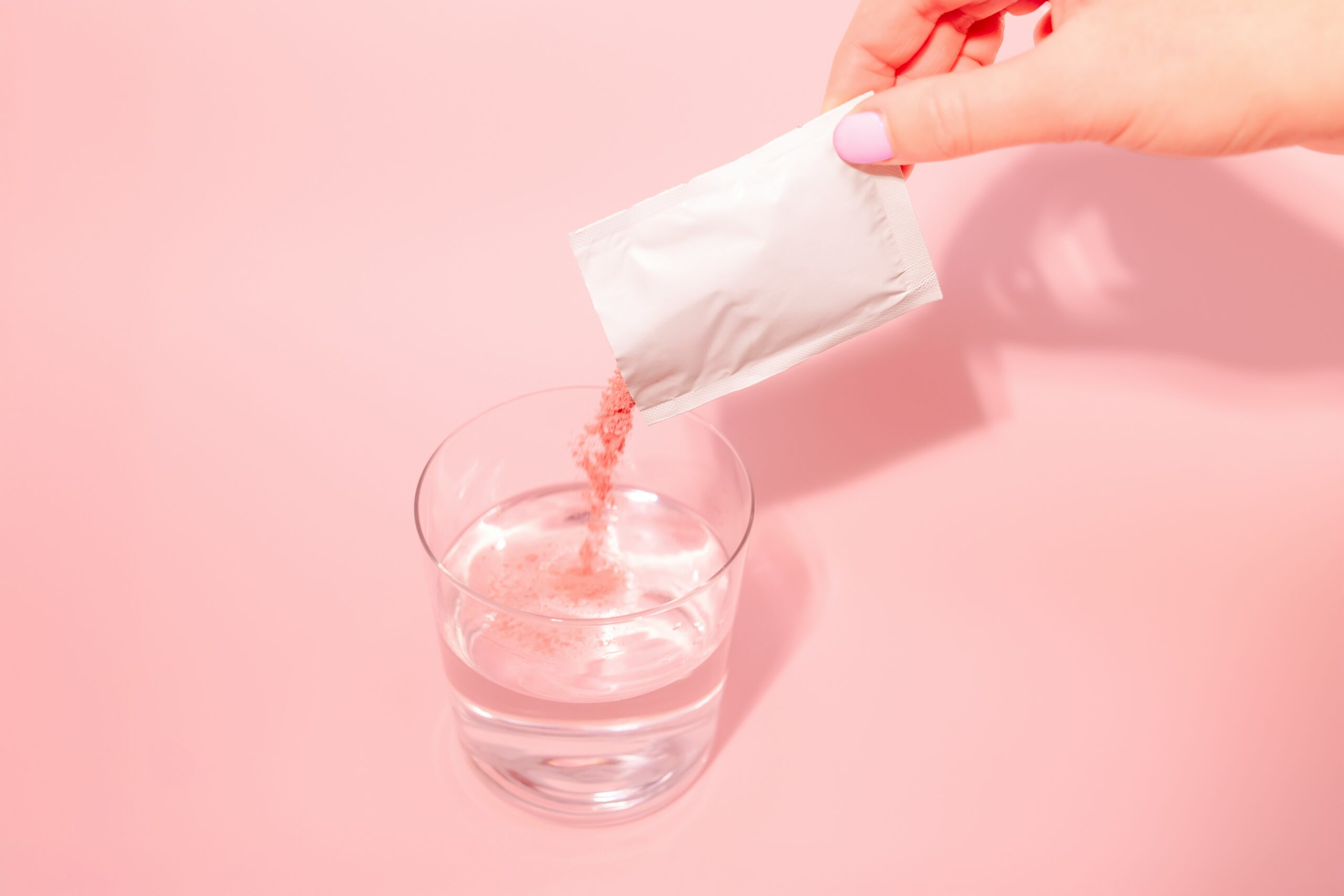
Pastel pouches. Gummies with cheeky names. A creator holding a pink bottle up to a ring light and promising better sleep, clearer skin or a calmer mood. For a growing share of Gen Z, this is what buying supplements looks like.
New research from First & First Consulting and Prodege finds that supplement habits among Gen Z are tightly linked to TikTok, that the platform has become a billion-dollar supplement marketplace, and that the products winning there often sell on vibes before ingredients. It’s happening even as this generation says it questions health claims more than anyone.
Who’s taking them
Millennials remain the bigger supplement market for now: 63% of Millennial women and 63% of Millennial men take supplements regularly, compared with 49% of Gen Z women and 45% of Gen Z men.
But Gen Z adoption climbs steeply with age, and women are pulling ahead as it does. Among college-aged Gen Z, men and women are close (36% and 34%). By post-grad, women lead 49% to 44%. Among Zillennials, the oldest slice of Gen Z, 60% of women take supplements versus 52% of men. That puts Zillennial women almost level with Millennials, and makes them one of the strongest growth opportunities in the category.
The TikTok connection
The more likely Gen Z are to take supplements, the more likely they are to be on TikTok. 65% of Gen Z supplement users are on the platform, compared with 55% of non-users.
The bigger gap is in where they get their information. 42% of Gen Z supplement users turn to influencers for health advice, versus 28% of those who don’t take supplements. Creators aren’t only advertising these products. For many young buyers, they are the starting point for deciding what to take in the first place.
A billion-dollar shelf, decorated in pink
TikTok Shop drives more than $1 billion in revenue for the supplement industry, according to sales data analyzed via KaloData. Much of it flows through individual creators. The top accounts selling supplements on the platform earned an estimated $490,000 to $1.14 million each in the first half of the year.
What sells has a distinct look. The report calls it the “girlification” of supplements: pink packaging, cute aesthetics and playful names that lead with mood and lifestyle rather than the ingredients inside. The pitch is less “clinically studied dose” and more “this is the kind of person you’ll be.”
It’s an approach built squarely for young women, which lines up with where adoption is growing fastest. It also sits awkwardly next to Gen Z’s stated skepticism of marketing. The same generation that picks apart a “zero sugar” label is buying products designed to win on vibes rather than credibility.
They ask influencers first, but trust doctors more
Across health topics generally, Gen Z goes online first. 35% turn to influencers for health and wellness information, compared with 26% of Millennials. 29% use AI chatbots, versus 24%. Only 32% go to doctors, compared with 44% of Millennials. Wellness brands themselves rank low, at 19% for Gen Z and 24% for Millennials.
There’s an important nuance. Gen Z are more likely to go to influencers than to doctors, but they trust influencers substantially less. Doctors remain the trusted authority. They’re just rarely the first stop. The report frames this as an evolution of word-of-mouth: the modern version of “my cousin had that, here’s what worked for him,” driven by distrust of institutions and the rising cost of care.
For supplements, that creates an interesting gap. Influencers start the conversation and drive the sale, but credibility still lives with medical experts.
What this means for supplement brands
The opportunity is large, and the playbook is shifting. A few takeaways:
- Treat TikTok Shop as a core channel. With more than $1 billion flowing through it, it’s no longer an experiment for this category.
- Focus on Zillennial women. They’re adopting at nearly Millennial rates and are the clearest near-term growth audience.
- Partner with creators, but don’t lean on vibes alone. Aesthetic wins attention, yet Gen Z still trusts experts more than influencers. Pairing creator reach with credible, expert-backed proof can close that gap.
- Expect scrutiny. A generation that questions labels will eventually turn the box over. Transparent ingredients and honest claims protect the repeat purchase.
The brands that win will be the ones that look good in a creator’s hand and still hold up when a skeptical Gen Z buyer asks a doctor about them.
About the research
The Gen Z Health Paradox is a joint study by First & First Consulting and Prodege. It surveyed 3,000 US adults aged 21 to 80 through Prodege’s proprietary panel in June 2026: 1,000 Gen Z, 1,000 Millennials, 500 Gen X and 500 Baby Boomers. Because respondents were 21+, findings may not reflect younger Gen Z. The survey was paired with social listening across 78,000 public, English-language posts, plus TikTok Shop sales data from KaloData.

Bridget Tirella
Share This Article
Recent Press Releases
Prodege Appoints Todd Parsons Chief Executive OfficerProdege Appoints Todd Parsons Chief Executive Officer Prodege Welcomes Todd Parsons as CEO EL [...]
AdGate Media is Now Part of ProdegeAdGate Media is Now Part of Prodege AdGate Media has officially joined Prodege, a global lea [...]
Prodege Unveils Conversational AI Within Pollfish Platform, Empowering All Customers to Access Real Human Insights at ScaleEL SEGUNDO, Calif., May 21, 2025 (GLOBE NEWSWIRE) -- Prodege, a leading provider of consumer insigh [...]