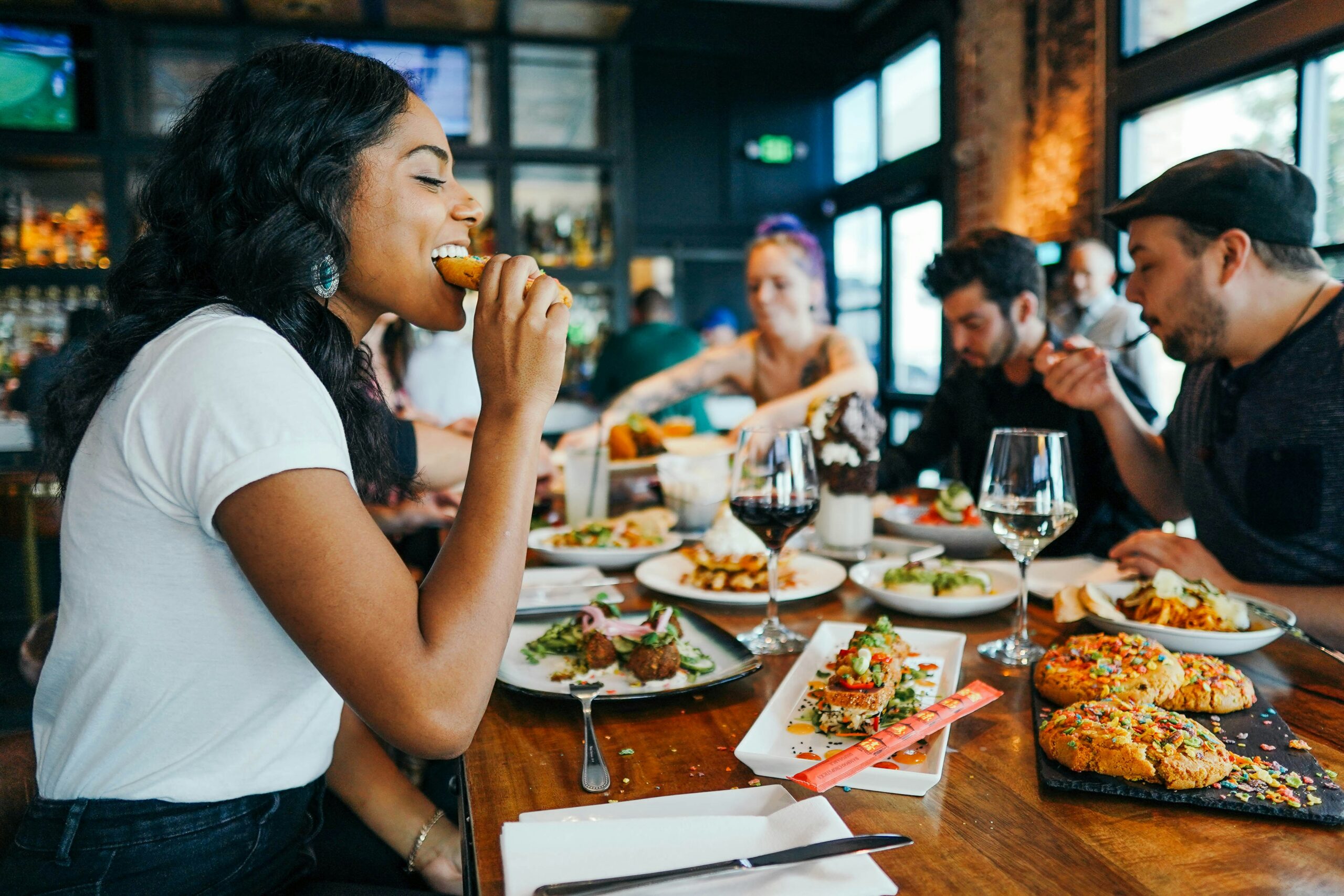
Food is about more than what ends up on the plate. For Gen Z, what, where and why they eat is shaped by financial pressure, social media, changing routines and a growing number of places to get a meal. In this three-part series, we’ll take a closer look at the forces shaping Gen Z’s food choices, from the role of money and stress to the influence of social media and the blurring line between grocery shopping and eating out. We’ll start with the pressure they’re feeling around food, and what it means for the brands trying to reach them.
How Stress and Money Shape What Gen Z Eats
Maya is 23. It’s Tuesday evening, and she’s standing in front of an open refrigerator trying to figure out what dinner looks like.
Not much there. A few leftovers, some condiments, maybe enough to cobble something together if she’s feeling patient. Rent came out this week and the grocery budget absorbed the impact.
She closes the refrigerator.
For a moment she considers skipping dinner. She’s done it before when money was tight. About a third of Gen Z adults have skipped a meal in the past six months to stretch their food budget, compared with roughly 1 in 10 Baby Boomers and older Americans.
She opens a delivery app instead. This is not the friction-free option it might look like from the outside. She scrolls past what she’d actually want and starts doing the math. About a third of Gen Z feel anxious or stressed about the cost of eating out or looking at a restaurant menu almost always or frequently. Only 8% say they never feel that way. Among Boomers+, nearly a quarter say they never do.
She settles on fast food. Inexpensive, no effort required and, after the day she’s had, it still feels a little like a reward.
That last part matters more than it might seem.
For Maya’s generation, affordability has become part of what makes food feel comforting. Roughly a third of Gen Z say a food can feel comforting specifically because it doesn’t add financial stress. Taste and familiarity still matter, but comfort now comes with a price check attached. Fast food fits that calculation well. More than half of Gen Z, 52%, say it can boost their mood, compared with just 22% of Boomers+. About a quarter of Gen Z say the same about delivery food; among older Americans, that figure is 4%.
Across town, Maya’s grandmother is making the same Tuesday dinner she’s made for years. Nearly 70% of Boomers+ say taste or texture is what makes a food soothing, and close to 60% point to familiarity. Comfort, for her grandmother, is about repetition and memory.
For Maya, it’s about what survives the price calculation.
When a Bad Day Changes Dinner
Maya’s food choices don’t shift only with her bank balance. They shift with her mood.
A rough day at work can mean fast food instead of cooking. Anxiety can mean snacking through the evening instead of eating a real meal. A stressful week can mean less food, different food or whatever requires the fewest decisions.
About 45% of Gen Z say stress, anxiety or a bad day changes what they eat frequently or almost always. Millennials aren’t far behind, at just over 40%. For Boomers+, the pattern runs nearly the opposite direction. A majority say stress rarely or never changes what they eat.
Food has become another place where daily pressure lands for younger Americans, something that moves with their emotional state rather than staying steady alongside it.
When Money Changes More Than the Grocery List
A few days later, Maya is at the grocery store, carrying a budget in her head from the moment she walks in.
The pressure doesn’t ease at the door. Roughly 30% of Gen Z say grocery shopping carries significant or extreme financial stress. Twelve percent describe it as one of their biggest financial anxiety triggers. Among Boomers+, that last figure is essentially zero.
She checks prices more carefully than she used to, skips things she’d normally grab and substitutes something cheaper for something she actually wanted. She picks up the good yogurt, checks the price, puts it back.
Sometimes the tradeoffs go deeper than brand swaps. About 30% of Gen Z say they’ve eaten something they didn’t really want in the past six months because it was the affordable option, compared with 16% of Boomers+. Similar shares have reduced portion sizes to save money, at roughly twice the rate of older Americans. Nearly 40% of Gen Z, Millennials and Gen X have shopped at discount or dollar stores for food. Some have also relied on meals from family or friends when money got tight.
These individual choices accumulate into something bigger. Nearly 7 in 10 Gen Z say financial stress has changed how they feel about food in general, not just what they buy. About 6 in 10 Millennials say the same. Among Boomers+, only 18% agree. When asked whether any of these financially driven behaviors apply to them, about 40% of Boomers+ say none do. Among Gen Z, fewer than 1 in 10 can say the same.
The Part You Can’t See in the Cart
The financial pressure doesn’t stop at the checkout line.
When Maya picks the cheaper meal, she may feel relief that she stayed within budget and disappointment that she couldn’t buy what she wanted, both at the same time. If she spends a little more on something she actually enjoys, the relief can tip into guilt. And sometimes there’s another feeling underneath all of it: the sense that everyone around her seems to be eating better.
Gen Z are far more likely than Boomers+ to say financial pressure around food makes them feel stressed or anxious, resentful, guilty or like they’re missing out. Only about 15% of Gen Z say financial pressure doesn’t really affect them emotionally when it comes to food. Among Boomers+, more than 40% say it doesn’t.
Part of that gap is frequency. For many older Americans, a genuinely tight food week is uncommon. More than 1 in 5 Boomers+ say money being tight isn’t something they regularly experience.
For Maya, it can just be Tuesday.
A Comfortable Week vs. a Tight One
The week after, Maya has more breathing room. She buys what she actually wants. She’s not anxious about wasted leftovers. Dinner feels like dinner again, not a constraint to solve.
That contrast is sharper for younger Americans than for older ones. Cooking at home more when money is short is something about 4 in 10 people do regardless of age. Beyond that, the experiences diverge. During tight weeks, 29% of Gen Z skip or delay meals more often, compared with 8% of Boomers+. Another 29% rely more heavily on convenience foods when money is tight, versus 4% of Boomers+. About a third say they enjoy meals less when worried about money, roughly three times the rate among Boomers+. Younger consumers also report spending more time planning and budgeting meals and feeling more anxious about food waste.
Nearly 4 in 10 Boomers+ say there’s no real difference between a financially tight week and a comfortable one when it comes to food. Fewer than 1 in 10 Gen Z say the same.
What This Means for Brands
The most important reframe this data asks of food brands is straightforward: for Gen Z, affordability and emotional resonance are not separate conversations. For older consumers, indulgence and value have long occupied different brand territories, addressed through different creative and different parts of the media plan. For a generation where roughly a third say a food feels comforting partly because it doesn’t add financial stress, that division breaks down. Value messaging that treats price as a functional claim and emotional connection as something layered on separately is working with a model that doesn’t match how this generation actually decides what to eat. The opportunity is to carry both in the same story.
Stress is also a more reliable occasion signal for this generation than most brands currently plan around. Forty-five percent of Gen Z change what they eat based on mood or stress frequently or almost always. That’s not an edge case. It’s a consistent behavioral pattern with real implications for how occasion-based targeting gets built. Reaching Maya at the moment she’s had a difficult day, with the right product and the right tone, is a fundamentally different kind of moment than reaching her during a planned grocery trip, and it calls for different creative, different formats and a different understanding of what the brand is offering her.
There is also a measurement problem worth naming. A third of Gen Z have skipped meals to save money in the past six months. Similar shares have reduced portions. These behaviors affect actual category consumption in ways that purchase data alone won’t capture. A shopper who appears in panel data as a regular buyer may be eating the category less often than her transaction history suggests. Layering in survey and qualitative research gives a more accurate picture of what’s happening between shopping trips and where the real consumption gaps are.
Finally, the question of aspiration. Nearly 7 in 10 Gen Z say financial stress has fundamentally changed their relationship with food. For a generation carrying that much weight around eating, content that frames healthy or pleasurable eating as effortless and obvious can read as alienating rather than motivating. The brands with the most room to connect are those that acknowledge the reality their consumers are navigating and make eating well feel like a reasonable thing to accomplish, not an ideal that most people are already falling short of.
More Than a Meal
Maya’s story isn’t an argument that every 23-year-old is struggling to put food on the table, or that older Americans are immune from financial pressure.
The difference is how thoroughly those pressures have become part of the eating experience for younger generations.
Her grandmother sees Tuesday dinner as a routine. Maya sees dinner too, but she’s calculating what it cost, weighing it against what she’d have preferred and sorting through some combination of relief, disappointment and guilt about the choice she made.
The meal is never just the meal. For any brand trying to understand what drives younger consumers’ food decisions, that’s where the analysis has to start.

Bridget Tirella
Share This Article
Recent Press Releases
Prodege Appoints Todd Parsons Chief Executive OfficerProdege Appoints Todd Parsons Chief Executive Officer Prodege Welcomes Todd Parsons as CEO EL [...]
AdGate Media is Now Part of ProdegeAdGate Media is Now Part of Prodege AdGate Media has officially joined Prodege, a global lea [...]
Prodege Unveils Conversational AI Within Pollfish Platform, Empowering All Customers to Access Real Human Insights at ScaleEL SEGUNDO, Calif., May 21, 2025 (GLOBE NEWSWIRE) -- Prodege, a leading provider of consumer insigh [...]